
Mobile RV Winterization / Dewinterization
We provide mobile RV winterization and dewinterization services to protect and prepare your RV for cold weather storage and get it ready for use again when the weather warms up.
RV Winterization
RV winterization refers to the process of preparing your RV for winter storage to prevent damage caused by freezing temperatures. The primary goal is to protect the water system, plumbing, and appliances from freezing and bursting, which could result in costly repairs. It’s especially important for RV owners in colder climates who won’t be using their RV during the winter months.
Steps for RV Winterization:
- Water Tanks: Drain the freshwater tank, gray water tank, and black water tank to remove any remaining water. This helps prevent freezing and cracking of the tanks.
- Water Lines: Open all faucets and drain the water lines completely, including the shower, kitchen, and bathroom faucets. Don’t forget to flush the toilet and drain the water heater as well.
Many RVs have a water heater bypass valve that allows you to bypass the heater during winterization. This helps prevent the water heater from filling with antifreeze, saving you from using unnecessary amounts.
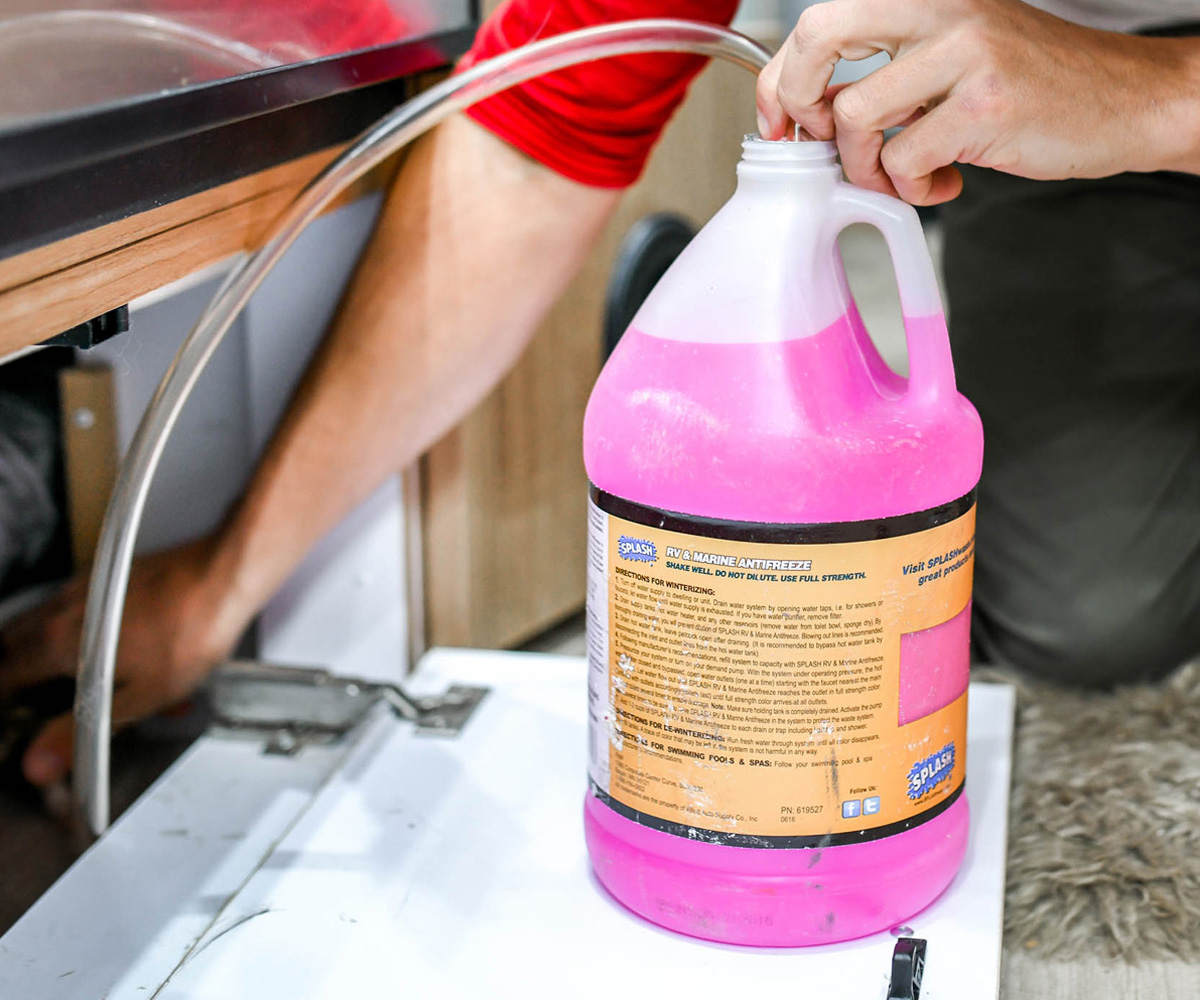
Use non-toxic RV antifreeze (usually pink) in the plumbing system to prevent freezing. Pour antifreeze into the water lines by using a pump or a hand siphon. Run the water through the system by activating each faucet, including the toilet and shower, to ensure antifreeze flows through all the pipes and valves.
Add RV antifreeze to the toilet’s holding tank and into the gray water tank. This helps protect the waste system from freezing.
Clean the RV thoroughly, including the roof, windows, and tires. Seal any vents, windows, or openings to prevent cold air and moisture from entering.
Remove the RV batteries and store them in a dry, cool place to prevent freezing. If they are left in the RV, ensure they are fully charged and disconnect them to prevent drainage.
Inspect and maintain any seals and caulking on windows, doors, and roof vents to ensure they’re watertight. If you find cracks or gaps, repair them before storing the RV.
Use vent covers to protect the RV’s plumbing vents and external appliances from snow, ice, or debris buildup.
RV Dewinterization
RV dewinterization is the reverse of winterization. It’s the process of getting your RV ready for use after it’s been stored for the winter. Dewinterization typically takes place when the weather starts to warm up, and you plan to start using your RV again.
Steps for RV Dewinterization:
The first step in dewinterization is to flush out the RV antifreeze from the plumbing system. This is usually done by draining the antifreeze from the water lines and then running fresh water through the system. You can use a water pump to push fresh water through the pipes to flush out any residual antifreeze.
Check the water pump, faucets, and water heater for any leaks or issues. Ensure everything is functioning correctly before moving forward.
If you bypassed the water heater during winterization, now is the time to reconnect the water lines and fill the water heater with fresh water. Be sure to check for leaks or issues around the water heater connections.
Turn on all faucets and the toilet to ensure the system is properly filled with fresh water. Test the shower, kitchen, and bathroom sinks, as well as the toilet and outdoor shower if your RV has one.
If you removed the batteries for the winter, inspect them for any signs of damage or corrosion. Reinstall them or replace any old batteries. If you left the battery inside the RV, check its charge and recharge it if necessary.
Remove any protective covers, such as those on the vents, tires, and windows, that were used during winterization. Check for any signs of damage from snow, ice, or wind that might have occurred while the RV was stored.
Inspect the tires for proper inflation and signs of wear. Make sure your RV’s fluid levels, including engine oil, transmission fluid, and coolant, are all topped up.
It’s a good idea to sanitize your water system before you start using it again. Use a bleach solution to disinfect the fresh water tank and plumbing system, and then flush it out by running the water through all the taps.
Test the stove, refrigerator, furnace, air conditioning, and any other appliances to ensure they’re working properly after sitting unused during the winter.
Why Winterization and Dewinterization are Important:
- Prevents Damage: Freezing water inside pipes, tanks, and appliances can cause significant damage, resulting in expensive repairs.
- Maintains Efficiency: Properly winterizing your RV ensures the plumbing, appliances, and other systems are in good condition when you’re ready to use them again.
- Protects Investment: Winterization and dewinterization help protect your RV’s value and extend its lifespan by preventing freeze damage and wear.
- Ensures Safety: Antifreeze keeps plumbing systems safe from freezing and helps prevent dangerous situations like broken water lines or burst pipes.
When Should You Winterize Your RV?
- Timing: You should winterize your RV before the first freeze of the season, which can vary depending on your location. In colder climates, it’s essential to winterize in late fall, before temperatures regularly dip below freezing.
When Should You Dewinterize Your RV?
- Timing: Dewinterization should take place when temperatures are consistently above freezing, typically in early spring or whenever you’re ready to use your RV after the cold season.
By performing proper winterization and dewinterization, you ensure that your RV is ready for storage in the winter and operational when it’s time to hit the road again, free from any issues caused by cold weather.