
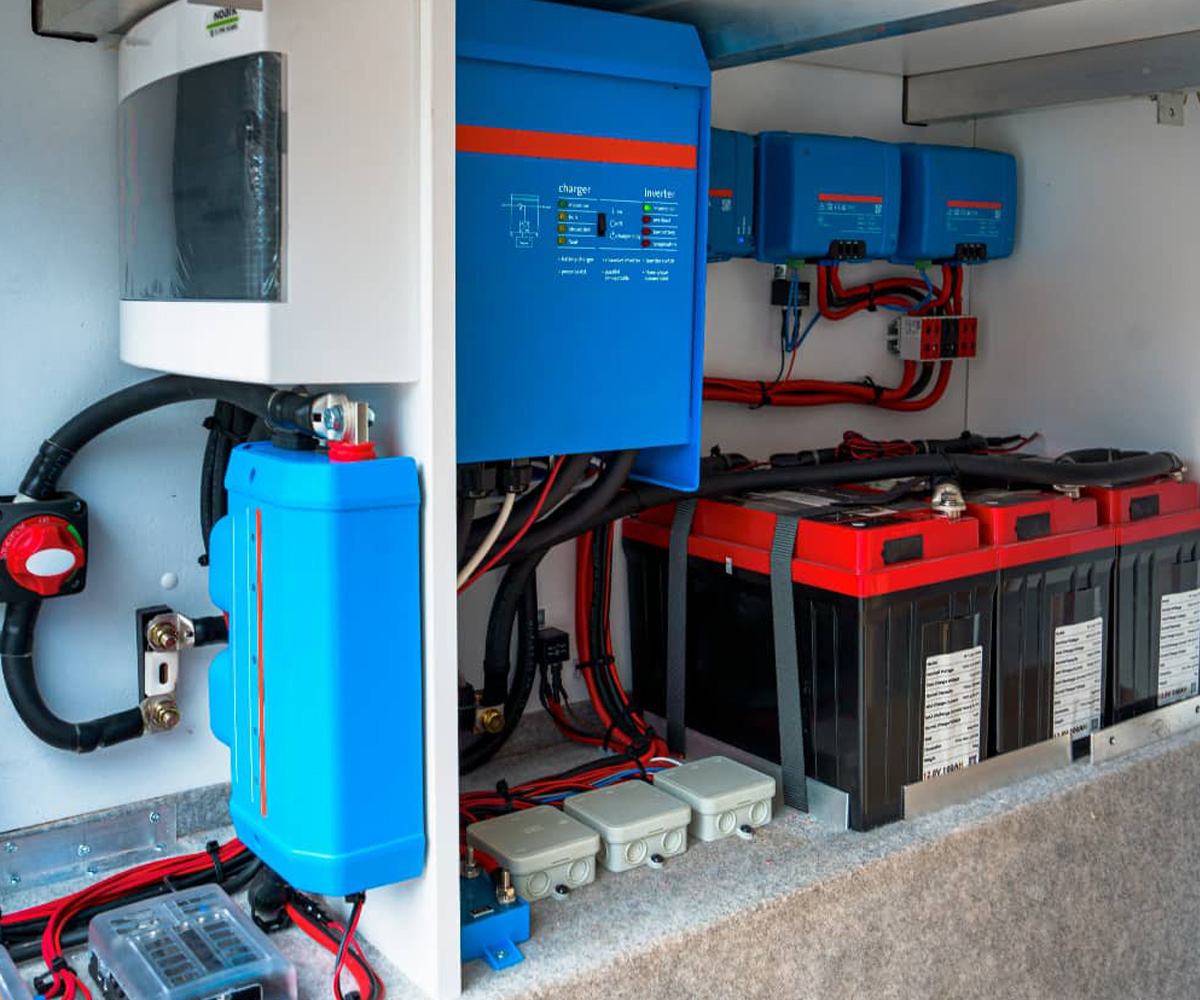
Mobile RV Electrical Repair
We provide mobile RV electrical repair which includes the process of diagnosing, fixing, and maintaining the electrical systems within a recreational vehicle (RV). The electrical system in an RV is essential for powering various appliances, lights, outlets, and even the vehicle’s engine. Because RVs are often used off the grid, they rely on a combination of shore power (120V AC), batteries (12V DC), and generators, which all need to work properly for the RV to function smoothly.
Key Components of an RV Electrical System:
- 12V DC System: This is the low-voltage system that powers lights, fans, water pumps, and other appliances that don’t require high power. It is supplied by the RV’s batteries.
- 120V AC System: This is the high-voltage system, typically used for appliances like air conditioners, microwaves, refrigerators, and outlets. It is powered by shore power, a generator, or an inverter.
- Battery System: RVs usually have one or more deep-cycle batteries that store power for the 12V DC system. The batteries are recharged by the RV’s engine, solar panels, shore power, or a generator.
- Inverter/Converter:
- Inverter: Converts 12V DC power to 120V AC power, allowing you to use household appliances when not connected to shore power.
- Converter: Converts 120V AC shore power to 12V DC to charge your RV batteries and power 12V appliances.
- Fuses and Breakers: Fuses protect the electrical system by cutting off the flow of electricity if a circuit is overloaded. Circuit breakers serve a similar function for higher-voltage circuits.
- Power Distribution Panel: This is where the AC and DC electrical systems meet. It’s where fuses and circuit breakers are housed, and it helps manage power distribution throughout the RV.
Preventive Maintenance Tips:
- Regularly Inspect Fuses and Breakers: Make sure all fuses are working and that circuit breakers aren’t tripped unnecessarily.
- Clean Battery Terminals: Keep battery terminals clean and free of corrosion to ensure a good electrical connection.
- Test the Electrical System: Periodically test both the 12V and 120V systems to ensure they’re working as expected.
- Protect Against Overloads: Avoid running too many appliances on the same circuit, especially when connected to shore power.
Common RV Electrical Problems and Repairs:
- Symptoms: Lights dimming, appliances not working, or the RV not starting.
- Possible Causes: A dead or dying battery, poor connections, or corrosion on battery terminals.
- Repair Tip: Inspect the battery terminals for corrosion and clean them if necessary. Test the battery voltage with a multimeter to see if it’s within a healthy range (usually 12.6V for a fully charged 12V battery). Replace the battery if it’s faulty.
- Symptoms: Lights dim or flicker when running off the battery, or they don’t turn on at all.
- Possible Causes: Loose wiring, blown fuses, or faulty light fixtures.
- Repair Tip: Check the fuse panel for any blown fuses, and replace them. Inspect the wiring for any loose connections or exposed wires, and tighten or repair them. Replace any faulty bulbs or fixtures.
- Symptoms: Appliances that need 120V power won’t work, or the 12V battery is not charging properly when connected to shore power.
- Possible Causes: A malfunctioning inverter or converter, a faulty power source, or a broken circuit.
- Repair Tip: Inspect the inverter and converter for error codes (if applicable) and check all connections. If you suspect the inverter is malfunctioning, it may need to be replaced. A professional can test the converter and check if it’s converting power correctly.
- Symptoms: Tripped circuit breakers, blown fuses, or appliances not working.
- Possible Causes: Overloaded circuits, a short circuit in the wiring, or faulty appliances.
- Repair Tip: Identify the circuit that is causing the problem and check for overloaded devices or faulty wiring. Reset circuit breakers, but if the problem persists, inspect the system with a multimeter for any shorts or loose connections.
- Symptoms: The RV doesn’t seem to be receiving power from the external source.
- Possible Causes: A faulty power cord, issues with the shore power pedestal, or a broken connection in the RV’s power inlet.
- Repair Tip: Inspect the power cord for any visible damage and ensure it’s securely plugged in. If the connection at the shore power pedestal is good, inspect the RV’s power inlet and check for a blown fuse or tripped circuit breaker. If you suspect issues with the RV’s internal wiring, a professional will need to diagnose and repair it.
- Symptoms: Lights and appliances powered by the battery aren’t working when the RV is in motion.
- Possible Causes: A broken alternator, damaged wiring, or issues with the charging system.
- Repair Tip: Inspect the alternator and check the voltage output to ensure it’s charging the battery properly while driving. Check all wiring connections between the alternator, battery, and power distribution system.
- Symptoms: The generator runs but does not provide power to the RV’s electrical system.
- Possible Causes: A malfunctioning generator, a bad connection, or a tripped circuit.
- Repair Tip: Check the fuel levels, oil levels, and air filters on the generator. Inspect the power cord and ensure it’s securely connected. If the generator still doesn’t work, it may need to be serviced by a technician.
- Symptoms: Electrical appliances act erratically or stop working, and there may be a buzzing sound in the outlets.
- Possible Causes: A grounding issue, poor grounding of the RV’s electrical system, or faulty connections.
- Repair Tip: Inspect the grounding system and ensure all connections are secure. If you’re unsure, an electrician can check for grounding problems and resolve them.
- Multimeter: For testing voltage, continuity, and troubleshooting electrical components.
- Wire Cutters/Strippers: For cutting and stripping wires when repairing connections.
- Electrical Tape: For insulating and securing wires after repair.
- Fuses and Circuit Breakers: Keep replacements for blown fuses or tripped breakers.
- Battery Tester: To check the voltage of the RV’s batteries.
- Crimping Tool: For securing wire connectors.
When to Call a Professional:
- Complex Wiring Issues: If you’re not comfortable working with high-voltage or complicated wiring systems, it’s best to call a professional.
- Generator Repair: Working with a generator can be tricky and may involve fuel systems or other dangerous components. A technician can safely diagnose and repair it.
- Converter or Inverter Issues: These components can be complex, and a professional may be needed to determine if they need repair or replacement.
Proper maintenance and prompt attention to electrical issues can help prevent costly repairs and ensure your RV’s electrical system is safe and reliable. Let us know if you need help troubleshooting any specific electrical problem!
01
Mobile
Workshop
Save time and money. We bring our shop to you. Providing convenient and flexibly service.
02
Our
Guarantee
Our repair service will be delivered to you until you are 100% completely satisfaction.
03
Certified
Service
We are RV certified to inspect, service and maintain recreational vehicles.