
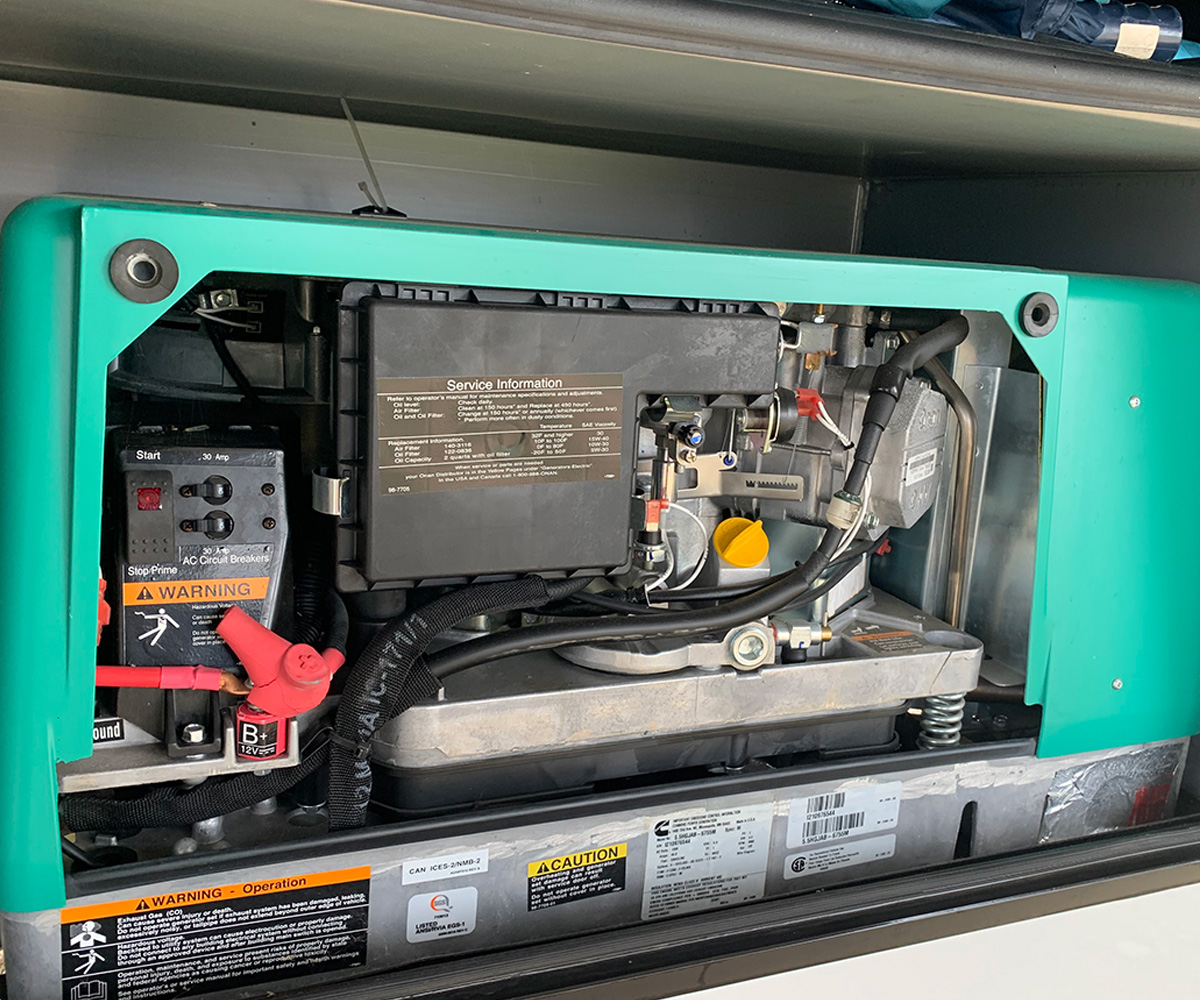
Mobile RV Generator Repair
We provide mobile RV generator maintenance and repair for ensuring that your RV’s generator runs smoothly, reliably, and efficiently. An RV generator powers appliances, lights, and other systems in your RV when you’re not plugged into shore power, making it a crucial part of your RV’s electrical system. Regular maintenance will prolong the lifespan of the generator and prevent costly repairs or breakdowns during your trips
Common RV Generator Maintenance Tasks:
- Check and Change the Oil:
- Why: Oil lubricates the engine, preventing wear and tear. Over time, oil breaks down and becomes less effective.
- How Often: Typically, oil should be changed every 100–150 hours of use or at least once a year, whichever comes first. Always follow the manufacturer’s recommendations for oil change intervals.
- Tip: Make sure you use the recommended oil type (usually a multi-viscosity motor oil for small engines). Check the oil level before each use to ensure proper lubrication.
- Replace the Air Filter:
- Why: The air filter keeps dirt and debris out of the engine. A clogged air filter can cause poor performance and damage to the engine.
- How Often: Check the air filter every 100 hours of use or annually. Replace it when it becomes dirty or damaged.
- Tip: If you’re using your generator in dusty environments, the air filter may need to be replaced more frequently.
- Change the Fuel Filter:
- Why: The fuel filter ensures that clean fuel reaches the engine, preventing contaminants from clogging the carburetor or injectors.
- How Often: Fuel filters typically need to be replaced every 100–200 hours of use, depending on your generator and fuel type.
- Tip: If you’ve let your generator sit unused for a long time (e.g., over winter), it’s a good idea to change the fuel filter before using it again.
- Inspect and Clean the Spark Plug:
- Why: The spark plug ignites the fuel, and a dirty or worn spark plug can cause the generator to misfire or not start.
- How Often: Check the spark plug every 100–150 hours of use. Replace it if it’s worn, damaged, or corroded.
- Tip: If the spark plug is covered in carbon or has oil buildup, clean it with a wire brush, or replace it entirely.
- Clean the Cooling System:
- Why: The generator’s cooling system prevents the engine from overheating. Dust, dirt, and debris can clog the cooling fins, causing the engine to overheat.
- How Often: Clean the cooling system every 100 hours or at least once a year.
- Tip: Check the cooling fins and radiator for dirt and debris. Use compressed air to blow out dust, or carefully clean the fins with a soft brush.
- Check and Maintain the Fuel System:
- Why: Fuel-related issues are one of the most common causes of generator failure. Old, stale fuel can clog the carburetor or fuel lines.
- How Often: Drain the fuel tank if the generator is not in use for an extended period (e.g., for the winter).
- Tip: Always use fuel stabilizer if you plan to store your RV or generator for a long time to prevent fuel from breaking down.
- Check the Exhaust System:
- Why: A clogged or damaged exhaust system can affect the generator’s performance and pose a safety risk.
- How Often: Check the exhaust system every 100 hours or annually for signs of rust, cracks, or debris.
- Tip: Ensure that the exhaust is free of blockages, especially if the generator has been in storage for a while.
- Test the Generator Regularly:
- Why: Running your generator for a few minutes every month can help prevent fuel degradation, keep the battery charged, and ensure that the system is functioning.
- How Often: Run your generator for about 15–30 minutes once a month, even if you’re not using it for camping.
- Tip: While running the generator, check that it’s operating smoothly and listen for any unusual sounds (e.g., knocking, sputtering) that could indicate a problem.
Tips for Prolonging Generator Life:
- Run Your Generator Regularly: Use it at least once a month for 15-30 minutes to keep it in good shape.
- Store Properly: If you’re not going to use your generator for a while, drain the fuel or use fuel stabilizer, and cover the generator to protect it from dirt and debris.
- Follow the Manufacturer’s Recommendations: Always refer to the owner’s manual for specific maintenance intervals, oil types, and procedures.
Common RV Generator Problems and Repairs:
- Possible Causes: Dead battery, fuel issues, or spark plug problems.
- Repair Tip: Check the battery voltage and connections. Replace the spark plug if it’s dirty or damaged. Ensure that the fuel tank has fuel, and check the fuel filter for blockages.
- Possible Causes: Clogged carburetor, dirty air filter, or low fuel quality.
- Repair Tip: Clean or replace the air filter. Clean the carburetor to remove any buildup from old fuel. If fuel is old, drain it and refill with fresh fuel.
- Possible Causes: Dirty air filter, old fuel, or clogged fuel system.
- Repair Tip: Replace the air filter, check the fuel system for blockages, and clean the carburetor. If the fuel is old, drain it and add fresh fuel with stabilizer.
- Possible Causes: Dirty cooling system, blocked exhaust, or low oil level.
- Repair Tip: Clean the cooling fins, ensure the exhaust is clear, and check the oil level. Top off the oil if needed.
- Possible Causes: Faulty voltage regulator, circuit breaker tripped, or worn-out brushes.
- Repair Tip: Reset the circuit breaker, inspect the voltage regulator, and check for worn brushes or a damaged stator. A professional might be needed to replace the voltage regulator.
- Possible Causes: Overfilled oil, clogged carburetor, or burning fuel.
- Repair Tip: Check the oil level and ensure it’s not overfilled. Clean the carburetor and replace any worn seals that could be causing the smell.
- Multimeter: For checking electrical components and voltage output.
- Oil Filter Wrench: For changing the oil filter.
- Socket Wrench Set: To remove the spark plug and other components.
- Air Compressor or Soft Brush: For cleaning the cooling system and removing dust from the generator.
- Fuel Stabilizer: To keep fuel fresh if you store the generator for long periods.
- Spark Plug Wrench: For removing and replacing the spark plug.
When to Call a Professional:
- Electrical Component Issues: Problems with the voltage regulator, stator, or circuit board should be handled by a professional.
- Complex Carburetor Problems: If the carburetor is severely clogged or requires a full rebuild, it’s best to seek professional help.
- Generator Overhaul or Replacement: If the generator is beyond repair or needs a major overhaul, a professional technician will be needed.
Regular maintenance and timely repairs will ensure that your RV generator runs efficiently and reliably, keeping your RV powered and ready for your next adventure. Let us know if you need help with any specific repairs or maintenance steps!
01
Mobile
Workshop
Save time and money. We bring our shop to you. Providing convenient and flexibly service.
02
Our
Guarantee
Our repair service will be delivered to you until you are 100% completely satisfaction.
03
Certified
Service
We are RV certified to inspect, service and maintain recreational vehicles.